
Search Elbert County Court Dockets
Elbert County court dockets provide public access to case records filed within the 18th Judicial District of Colorado. Located on the Eastern Plains between Denver and Colorado Springs, Elbert County maintains its rural agricultural character while experiencing growth from the expanding Denver metropolitan area. The Elbert Combined Court in Kiowa handles all judicial matters for the county, including civil litigation, criminal cases, family law proceedings, and probate matters. Whether you need to search court records online or visit the courthouse in person, understanding the Elbert County court system will help you access the judicial services and information you require.
Elbert County Court Quick Facts
Elbert Combined Court Location
The Elbert Combined Court is located at 751 Ute Avenue, Kiowa, CO 80117. This courthouse serves as the primary judicial facility for Elbert County, housing both District Court and County Court operations. The 18th Judicial District comprises four counties: Arapahoe, Douglas, Elbert, and Lincoln. While the district's main administrative operations are centered in Douglas County, Elbert County maintains its own courthouse to serve local residents.
The courthouse operates during regular business hours Monday through Friday. The Clerk's Office accepts court filings, processes payments for fines and fees, and assists with public records requests. The rural nature of Elbert County means the courthouse serves a widely dispersed population across the county's expansive ranchlands and growing residential areas. Visitors should plan for the courthouse's location in Kiowa, which is approximately 45 miles southeast of Denver.
Kiowa is the county seat of Elbert County and home to the historic Elbert County Courthouse. The building provides accessible facilities for individuals with disabilities and maintains security screening for all visitors. Parking is available adjacent to the courthouse. The facility's rural location means limited public transportation options, so most visitors arrive by personal vehicle.
Elbert County Court Contact Information
The main phone number for Elbert County Combined Court is 303-621-2131. This line connects to the Clerk's Office, where staff can provide information about court dockets, filing requirements, hearing schedules, and case status. Court personnel can assist with questions about both District Court and County Court matters. Having specific case numbers or party names available when calling will help staff locate information efficiently.
The 18th Judicial District administration coordinates court operations across Arapahoe, Douglas, Elbert, and Lincoln counties. The district court handles felony criminal prosecutions, civil cases with damages exceeding $25,000, divorce and custody proceedings, and probate matters. The county court oversees misdemeanor criminal cases, traffic violations, civil cases under $25,000, and small claims disputes. Elbert County's rural character is reflected in its caseload, which includes agricultural-related disputes, ranch property issues, and cases arising from the county's growing residential development.
Email communications for Elbert County court follow Colorado Judicial Branch conventions. The court participates in the statewide e-filing system, which allows attorneys and self-represented parties to submit documents electronically. This system is particularly valuable for Elbert County residents given the distance to the courthouse from many parts of the county. E-filing reduces travel requirements and provides convenient 24-hour filing capability.
Elbert County Court Docket Search Online
The Elbert County docket search tool provides online access to case schedules and court events through the Colorado Judicial Branch website. This statewide system allows users to search for Elbert County cases by party name, case number, or date range. The docket search displays upcoming hearings, filing deadlines, and case status information for both District and County Court matters.
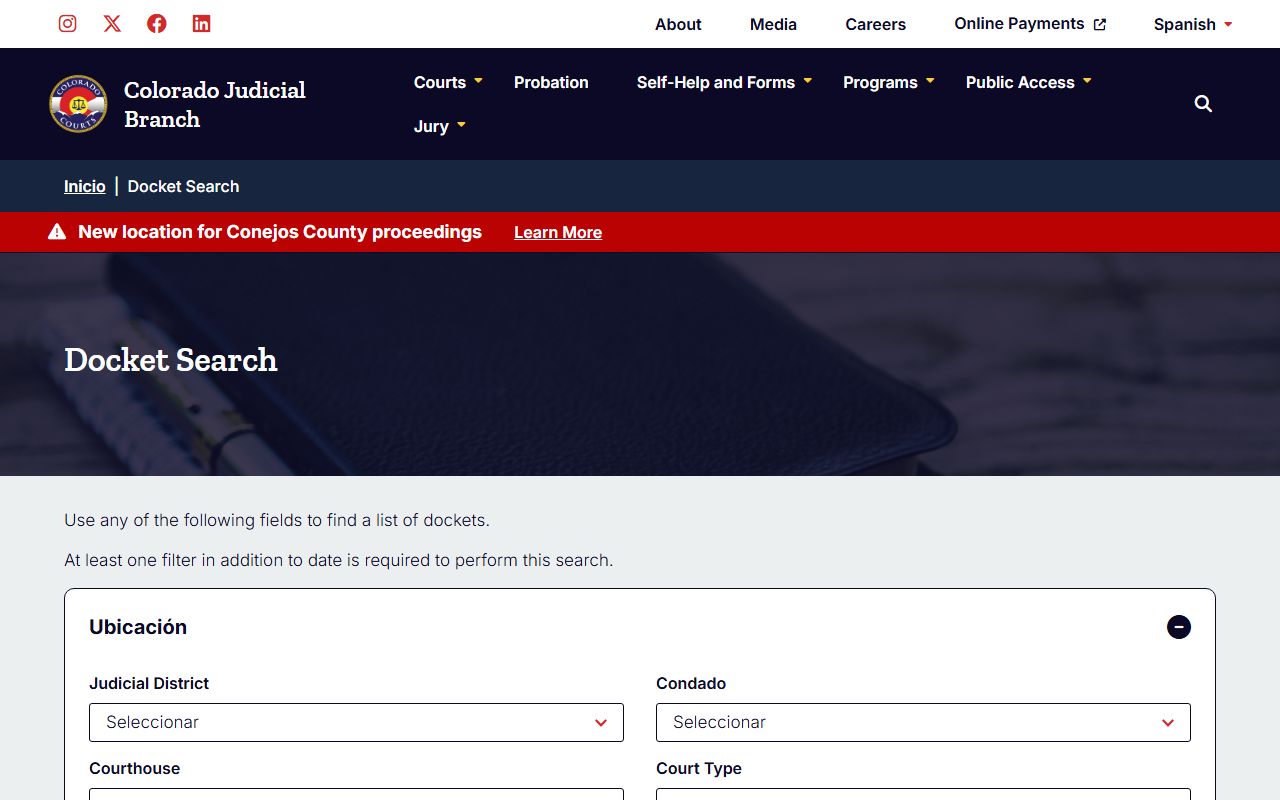
When using the online docket search for Elbert County, users must apply at least one filter criterion in addition to the date range. Available search parameters include party name, case number, attorney name, and court type. The system provides real-time information about scheduled court events, though the actual documents filed in cases are not displayed. To obtain copies of court filings, contact the Clerk's Office directly or submit a records request through the state's online system.
Effective search strategies for Elbert County court records include:
- Using complete last names for the most accurate results
- Adding first names or initials to narrow searches for common surnames
- Searching by case number when available for direct access
- Trying alternative spellings if initial searches are unsuccessful
- Applying date range filters to locate historical cases
The online docket system operates continuously at no cost. It offers the most efficient method for checking hearing dates, monitoring case progress, and verifying filing deadlines without traveling to the courthouse in Kiowa. The system updates regularly to reflect new filings and schedule changes.
Elbert County Court Records Policies
Elbert County court records are public documents under Colorado law, with access provided through the Clerk's Office and online systems. Certain case types have restricted access, including juvenile proceedings, certain family law matters involving children, protected probate cases, and sealed records. The Clerk's Office can explain access restrictions and the procedures for requesting records in restricted case types when authorized.
The court maintains records according to Colorado Judicial Branch retention schedules, with most case files preserved for extended periods following case closure. The adoption of electronic filing has improved records management and accessibility. Current case documents are typically available through the e-filing system for attorneys and parties of record. Historical records remain available, though very old cases may require retrieval from state archives.
For proceedings requiring certified copies of court orders, judgments, or decrees, Elbert County charges standard fees established by state statute. Certified documents are commonly required for out-of-state proceedings, property transactions, financial account changes, and official name changes. The court processes records requests efficiently, with most certified copies available within a few business days.
Requesting Copies of Elbert County Court Filings
Certified copies of court records from Elbert County cost $20 per document. This fee applies to certified copies of judgments, divorce decrees, probate orders, and other official court documents. Non-certified copies are available at $0.75 per page. Payment methods typically include cash, check, and money order. Contact the Clerk's Office at 303-621-2131 to confirm current payment options before submitting your request.
To request copies, visit the Elbert County Clerk's Office during business hours or submit a written request by mail. Include complete case information including case number, party names, and specific document descriptions. Provide current contact information so staff can notify you regarding fees and document availability. For large requests or cases requiring research to locate documents, additional processing time may be required.
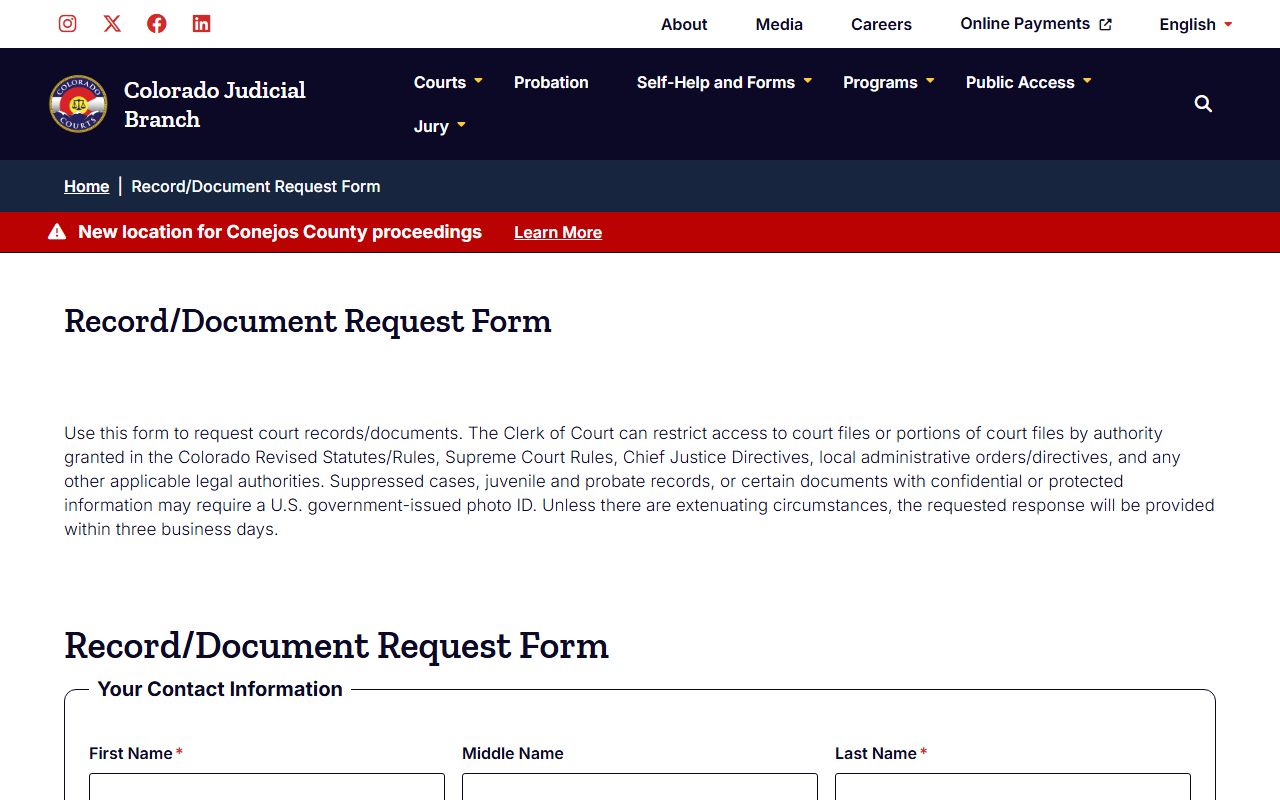
The Colorado Judicial Branch provides online records request capabilities for certain document types. This system allows parties to submit requests electronically and receive documents by mail, which is particularly convenient given Elbert County's rural location. Visit the state judicial website to determine if your specific records request can be processed through the online system for Elbert County cases.
Elbert County Court Self-Help Resources
The Colorado Judicial Branch provides self-help resources for individuals representing themselves in Elbert County court matters. These resources include standardized forms, detailed instructions for court procedures, and information about legal aid services. Many forms and guides are accessible online through the state judicial website, reducing the need for travel to the courthouse.
Commonly requested self-help materials cover divorce and legal separation, allocation of parental responsibilities, protection orders, name changes, and small claims cases. The court provides step-by-step instructions for completing forms and filing cases. While court staff cannot provide legal advice, they can explain procedures and direct individuals to appropriate resources for their situations.
Legal aid organizations serving Elbert County provide assistance to qualifying low-income residents. These services may include legal advice, limited scope representation, and referrals to private attorneys. Given the county's rural character, some legal aid services may be provided remotely or through scheduled clinic visits. Contact information for available legal assistance is available on the Colorado Judicial Branch website and at the courthouse.
Nearby Counties in the 18th Judicial District
Elbert County shares the 18th Judicial District with Arapahoe, Douglas, and Lincoln counties. This four-county district spans from the Denver metropolitan area to the Eastern Plains. Understanding the district's geographic scope can be helpful when dealing with cases involving multiple jurisdictions or when seeking related court records.
The 18th Judicial District is one of Colorado's most diverse judicial districts, encompassing urban, suburban, and rural communities. While administrative functions are concentrated in Douglas County, each county maintains its own courthouse to serve local residents. Judicial officers travel throughout the district to hear cases, and the court system has developed protocols to serve the distinct needs of each community within the district's jurisdiction.