
Colorado Court Docket Search
Finding court records in Colorado is now easier than ever. The state provides online tools to search court dockets across all 64 counties. You can look up case filings, court dates, and public records from your own home. Whether you need to check a court date or find case details, Colorado offers several ways to access court docket information.
Colorado Court Records Quick Facts
Colorado Court System and Docket Access
Colorado runs a unified court system. The Colorado Judicial Branch manages all state courts. This includes the Supreme Court, Court of Appeals, District Courts, and County Courts. Each court keeps its own docket of cases. A court docket is the official record of all proceedings in a case. It lists filings, hearings, and court orders.
The Colorado Judicial Branch homepage gives you access to all court resources. You can find court locations, forms, and self-help tools. The site also links to the statewide docket search system. This lets you look up cases across all Colorado counties from one place.
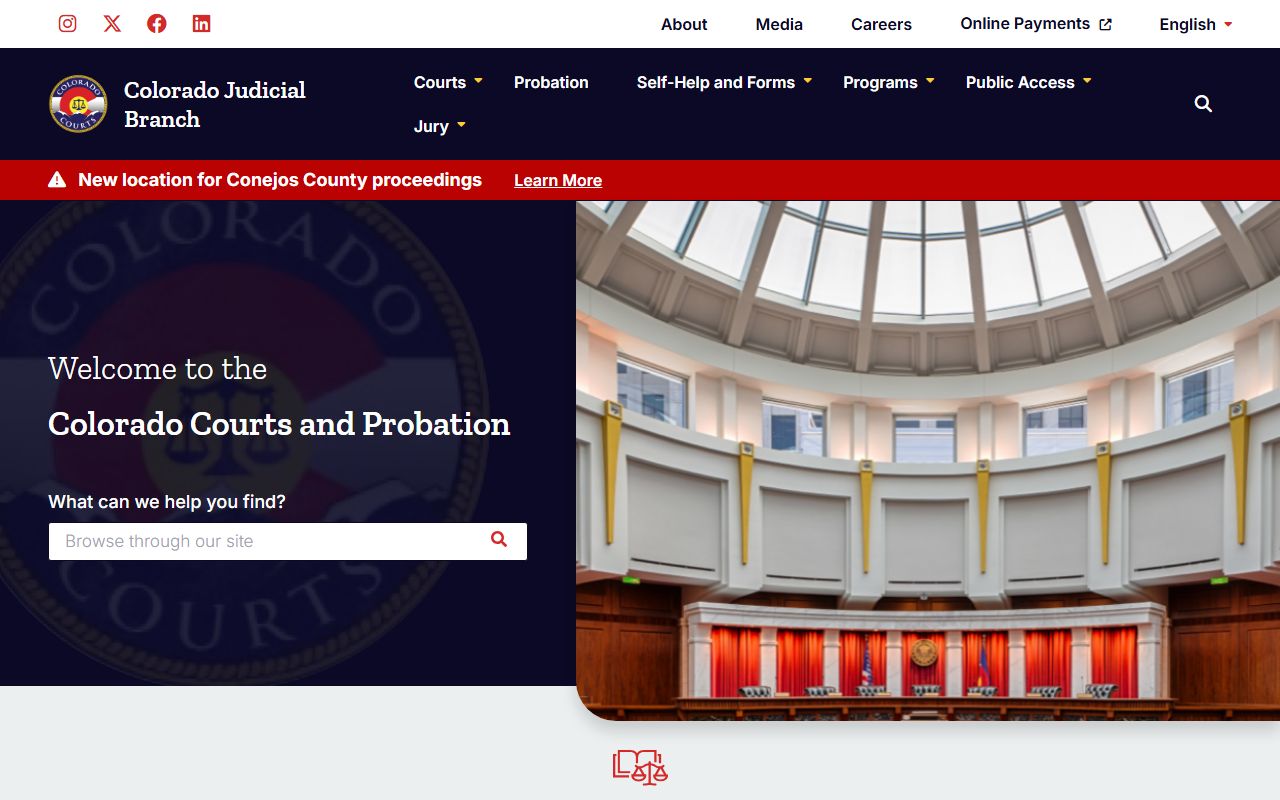
The judicial branch works to provide equal access to justice. They support families, litigants, and victims across the state. Their website offers help for people who represent themselves in court.
How to Search Colorado Court Dockets Online
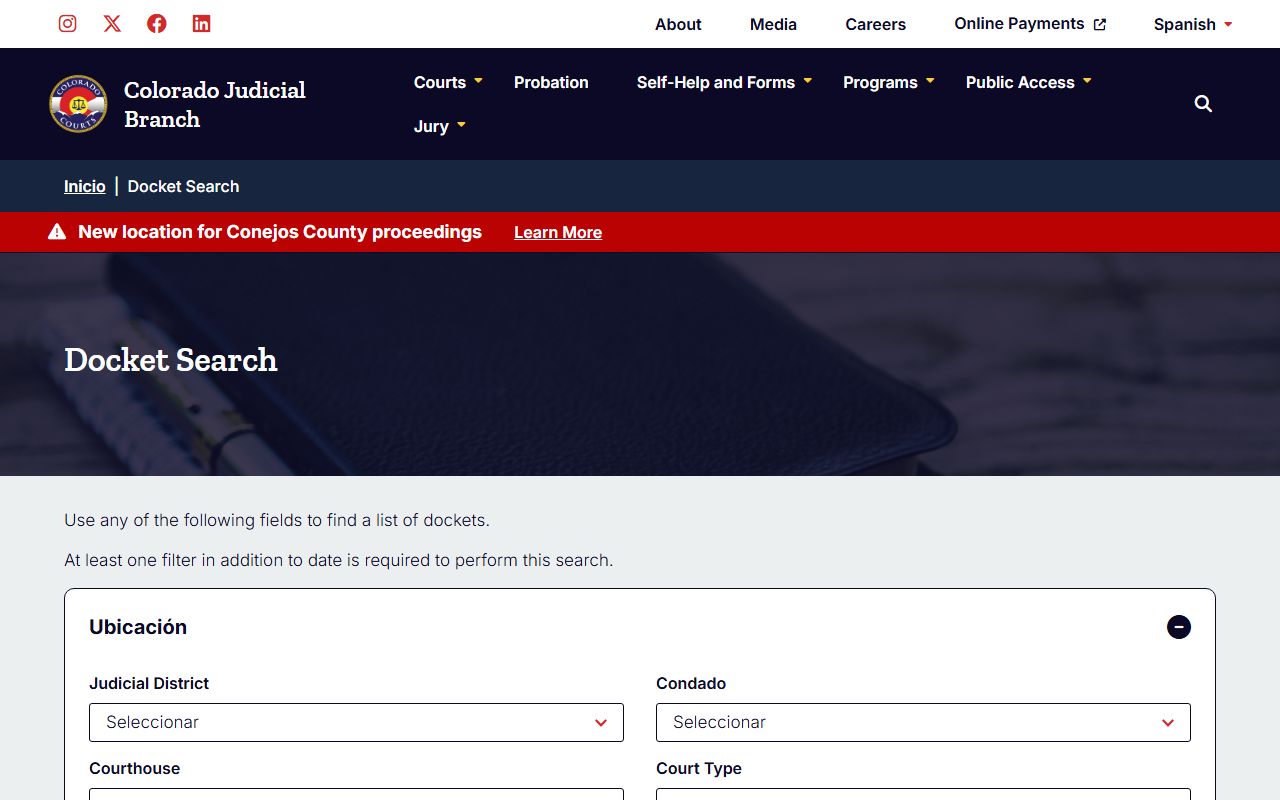
The best way to find court dockets in Colorado is through the statewide search portal. You can access this at coloradojudicial.gov/dockets. This tool lets you search by county, court type, date range, case number, or party name. You must use at least one filter besides date to run a search.
Case numbers follow a set format. They include a 4-digit year, case class, and case sequence. You can also search by party last name or company name. The docket search shows upcoming court dates and case events. It does not show the actual documents filed in the case.
Some courts offer more detailed online access. Third-party vendors also provide court record searches. These services charge fees. They include Background Information Services, LexisNexis, and Tessera Data. Copies of documents must come from the individual court.
Note: Denver County Court runs separately from the state system. Use their own portal for Denver cases.
Colorado Court Records Public Access Guide
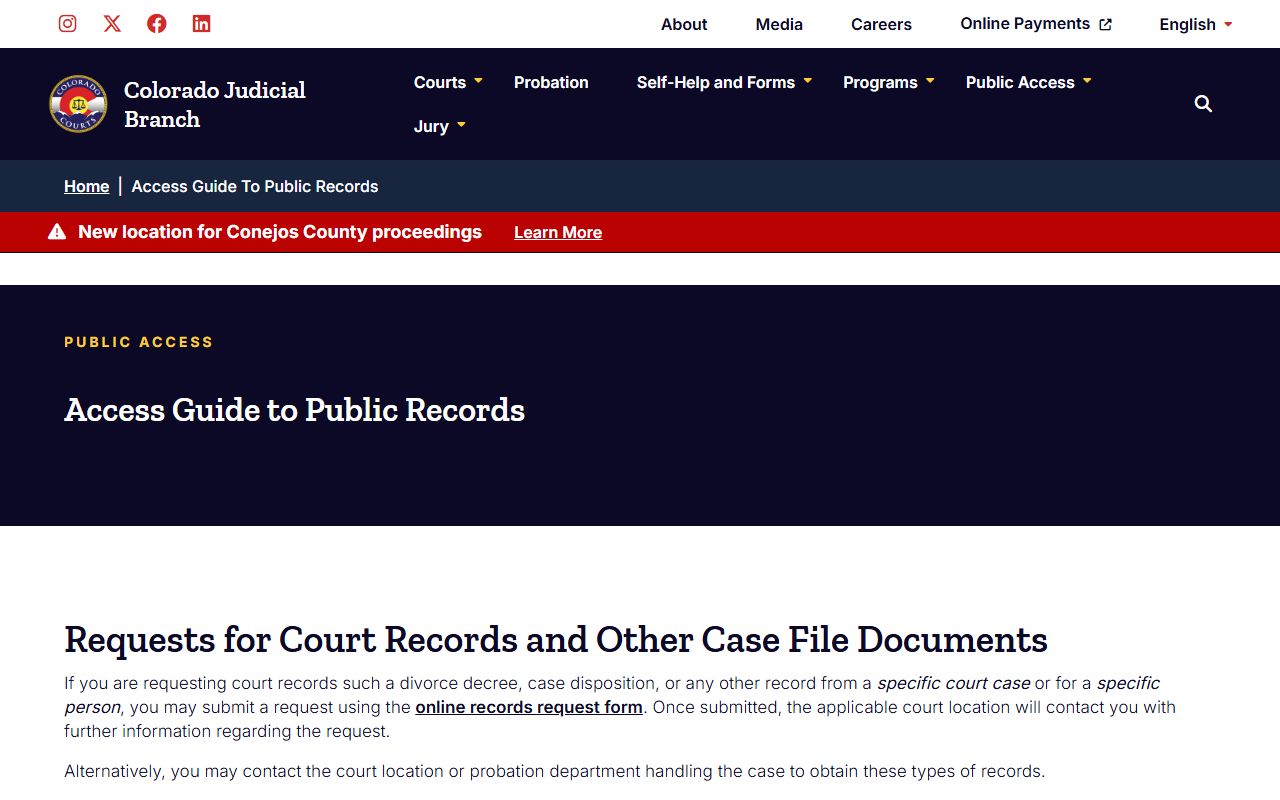
Colorado law gives you the right to view most court records. The Public Records Access Guide explains how to get records. There are two types of requests. One is for specific case records. The other is for compiled or aggregate data.
For case records, use the online request form. You can also contact the court directly. Each request is handled by the clerk of that court. The guide lists email addresses for data requests. Court data requests go to courtdatarequests@judicial.state.co.us. Financial data requests go to financialdatarequests@judicial.state.co.us. Probation data has its own email too.
Records are open per Chief Justice Directive 05-01. The Criminal Justice Records Act also governs access. These laws set the rules for what records the public can see. Some records may be sealed by court order. Juvenile records have special rules too.
Colorado State Courts Data Access Program
The State Courts Data Access portal gives registered users more tools. This system is for electronic read-only access to court data. You can view the name index and register of actions. It does not contain case documents.
To use this system, you need an account. Government agencies and courts can request accounts. The site tracks all searches for security. It logs your browser type, login ID, and search history. This helps maintain database security and billing accuracy.
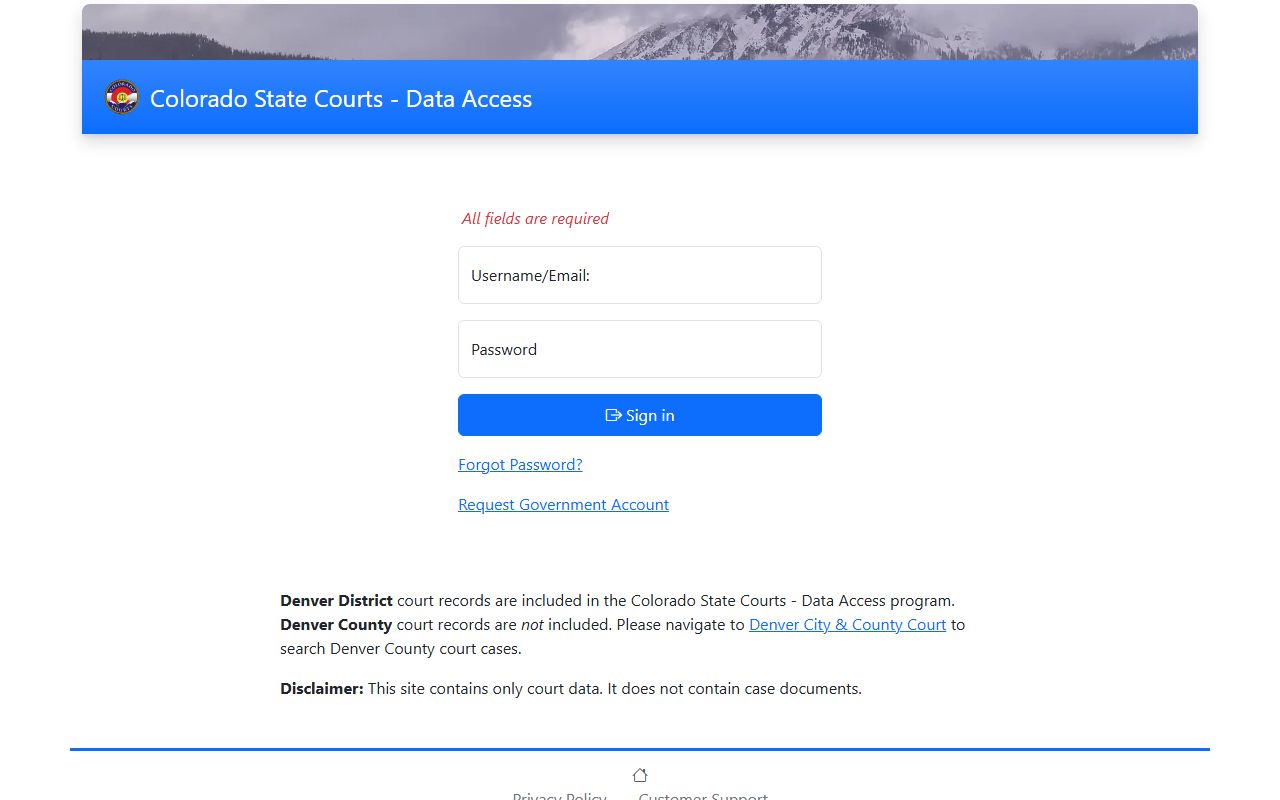
Denver District Court records are in this system. Denver County Court records are not. You must use the Denver City and County Court site for those. The portal has a privacy policy that explains data collection practices.
Note: Always check which court system holds the records you need before starting your search.
Requesting Colorado Court Docket Copies
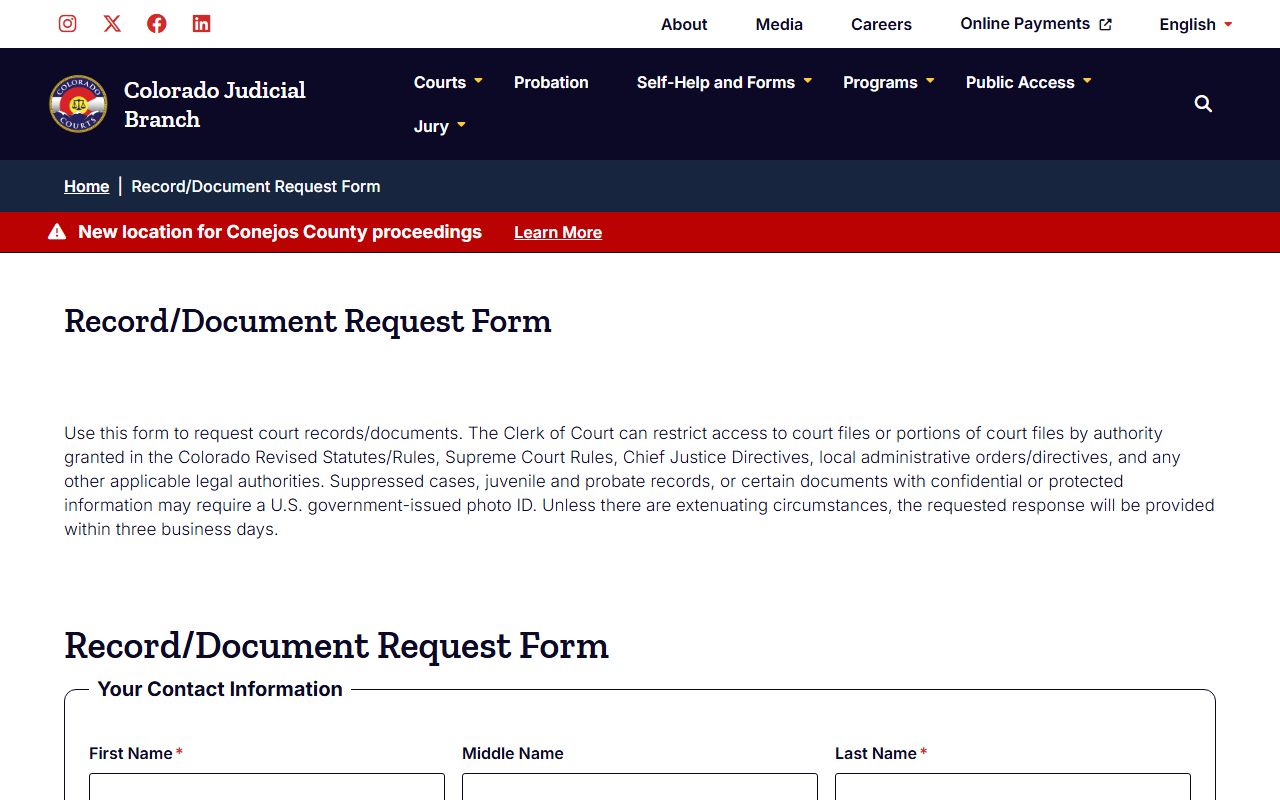
To get copies of court records, use the online records request form. This form is for specific case records. You can request divorce decrees, case dispositions, or other filings. You may also contact the court location directly.
The form asks for your contact details. You must describe the records you want. Include case numbers if you have them. Give the names of parties and the approximate date. The court will process your request and contact you about fees.
Fees vary by type of copy. Certified copies cost $20 each. Regular copies cost $0.75 per page. Some courts have coin-operated copy machines. These charge $0.25 per page. You can pay online for many services.
Colorado Court Docket Fees and Payments
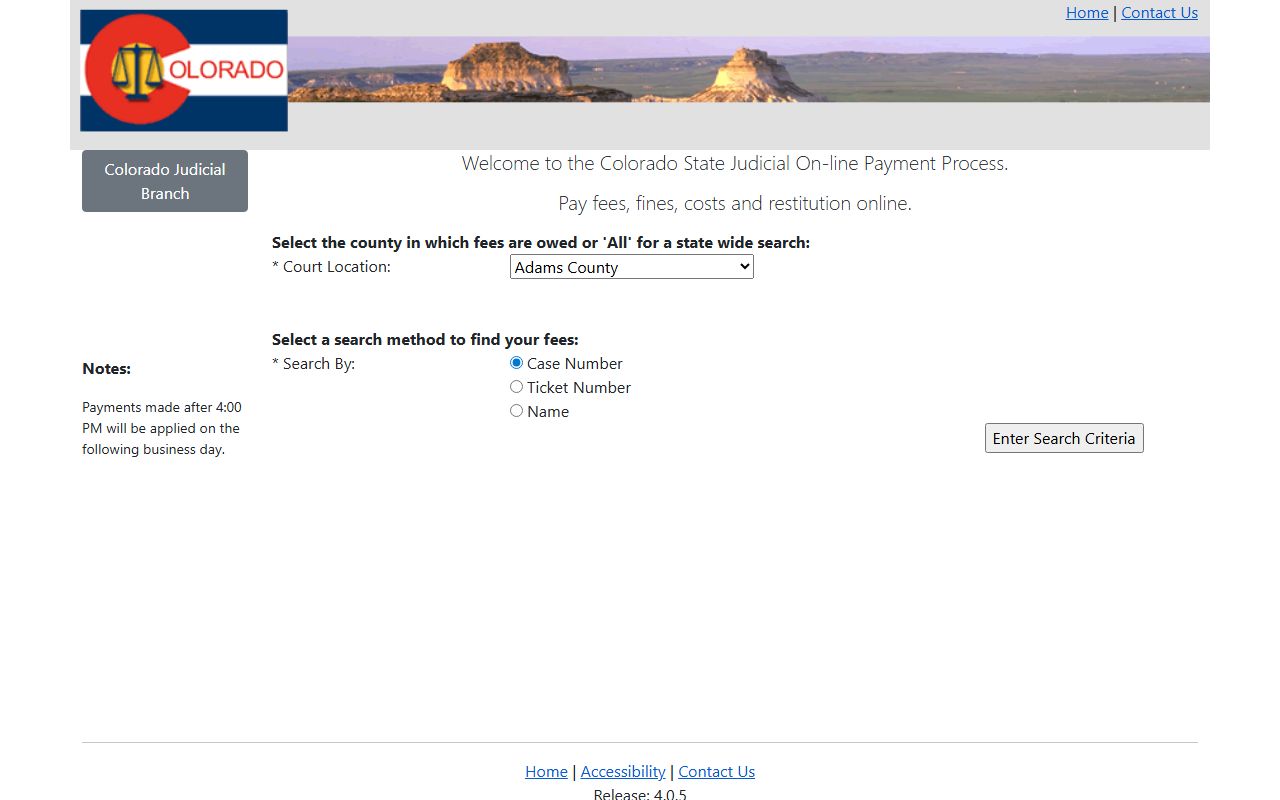
Getting copies of court records involves fees. The Colorado Judicial Payment System lets you pay online. You can pay fines, fees, and restitution through this site. It accepts credit cards and electronic checks.
The fee schedule lists all court costs. Certifying a copy costs $20. A certificate of exemplification also costs $20. Transcripts of judgment cost $25. Copy fees depend on whether documents are filed with the court. E-filing has its own fee structure too.
Note: Protection order forms are free by law. Always check current fees before ordering copies.
Finding Colorado Trial Courts by County
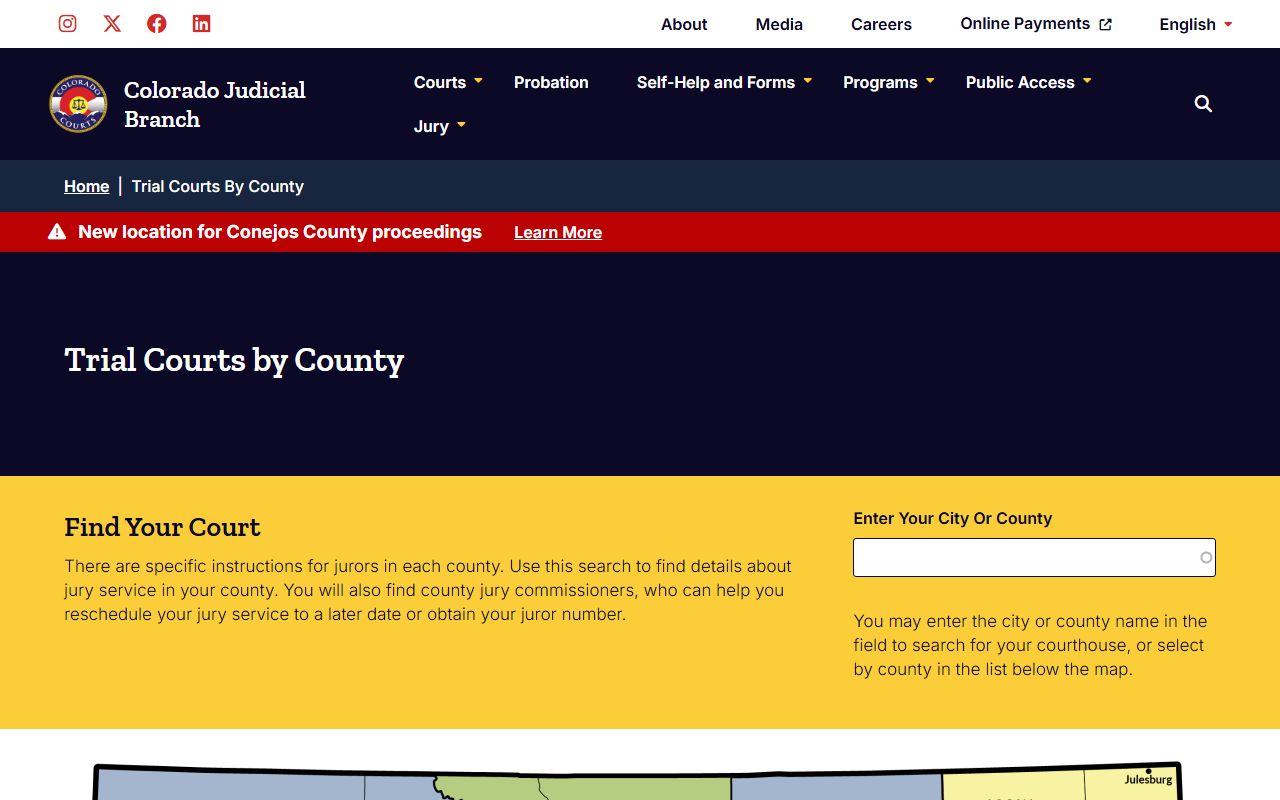
Colorado has 64 counties organized into 23 judicial districts. Each county has a combined court. This includes both County Court and District Court. The Trial Courts by County directory helps you find local courts.
You can search this directory by county name. It shows court addresses, phone numbers, and hours. Each court has a clerk who manages records. Some counties have multiple court locations. Larger counties may have separate buildings for different case types.
District Courts handle major cases. These include felonies, civil cases over $25,000, and family matters. County Courts handle misdemeanors, traffic cases, and civil cases under $25,000. Small claims also go to County Court. Water Courts deal with water rights in seven divisions.
Colorado Laws on Court Record Access
Several laws govern court records in Colorado. The Criminal Justice Records Act covers criminal case records. It defines what records are open to the public. It also sets rules for sealing records.
The Colorado Open Records Act applies to government records. It gives citizens the right to inspect public documents. The Sealing of Criminal Records law explains how records can be sealed. Sealed records are treated as if they do not exist.
Court filing fees come from C.R.S. Title 13. These statutes set the costs for court services. Chief Justice Directive 05-01 is the main policy for public access. The State Court Administrator oversees the ICON and Eclipse databases.
Juvenile records have special rules under the Children's Code. These records are more restricted than adult records. Family court cases may have sealed portions too.
Browse Colorado Court Dockets by County
Each of Colorado's 64 counties maintains court records. Select a county below to find local court contact information and docket search resources.
Colorado Court Dockets in Major Cities
Major Colorado cities fall within county jurisdictions. Municipal courts handle city ordinance violations. County and District courts handle state-level cases. Select a city below to learn about accessing court dockets in that area.
Colorado Court Contact Information
The Office of the State Court Administrator can help with general questions. Their address is 1300 Broadway, Suite 1200, Denver, CO 80203. You can call them at 720-625-5000 or toll-free at 800-888-0001. Their email is public.access@judicial.state.co.us.
The Colorado Supreme Court and Court of Appeals are at 2 East 14th Avenue in Denver. Their phone is 720-625-5150. For fee questions, call Court Processes and Resources at 720-625-5610.
Each county court has its own contact details. Check the county pages for specific phone numbers and addresses. Many courts have self-help centers. These centers assist people who represent themselves.